
How Was Yes Helping Hand Established
One day, Mr. Dinesh Thapa was sitting by the roadside, lost in the thoughts of a loved one he had recently lost. While staring at the road, he saw a man being beaten up by a group of others. When he rushed to help, the attackers fled, but the victim remained still, walking slowly as if he had heard nothing. Mr. Dinesh shouted for him to move, yet there was no reaction. Only then did he realize the boy couldn’t hear a word. Helpless and confused, Mr. Dinesh watched as the boy fled the scene and the guilt of not being able to help him weighed heavily on his heart.
A few days later, Mr. Dinesh came across a crowd gathered near a lake. As he approached, his heart sank — the lifeless body lying there was the same boy he had tried to rescue earlier. The shock and sorrow hit him deeply, reopening wounds from his own recent loss. His eyes welled up with tears of guilt and regret. That moment changed something inside him forever.
After days of reflection, he came to a powerful realization. He decided to dedicate his life to creating opportunities for specially-abled individuals — to make them as capable and independent as anyone else. Out of this determination, the idea of Yes Helping Hands was born.
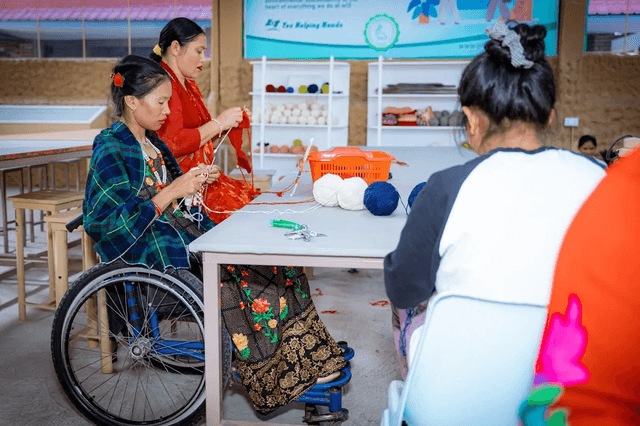
Mr. Dinesh began by hiring 27 people with hearing challenges and 5 people who were visually impaired. He invited trainers and professionals to help them develop their skills in weaving, knitting, and crafting beautiful pashmina and wool products. His mission was not charity, but empowerment — giving people the dignity of earning through their own craftsmanship.
Over time, his enterprise grew. Families of workers were supported in times of need, and the sense of community became stronger than ever. Foreigners who learned about the initiative began supporting it by purchasing locally made pashminas and handicrafts. Mr. Dinesh even brought in multilingual staff to communicate and teach effectively with artisans who had speaking or hearing challenges.
Beyond fair salaries, he ensured the well-being of every artisan. He built a canteen and dormitory so workers could save what they earned, live comfortably, and focus on their craft. His compassion transformed lives — proving that with love, guidance, and opportunity, everyone can create something beautiful.

Our Facts & Impact
Established
2011
Number of Artisans
90 (Blind / Deaf / specially-abled)
Staff Members
30 Dedicated Individuals
Sales Distribution
60% Export / 40% Domestic
Products
Shawls, Sweaters, Ponchos, Blankets, Scarves, Mufflers
Training Facilities
Handloom weaving, Dyeing, Knitting
Our Social Commitment
We dedicate 30% of our profits to support accessibility and welfare initiatives across Nepal — because every product we create brings hope and independence to someone in need.
Production Techniques
Traditional handloom weaving using natural and Swiss dye cashmere & wool threads — preserving heritage with modern care.